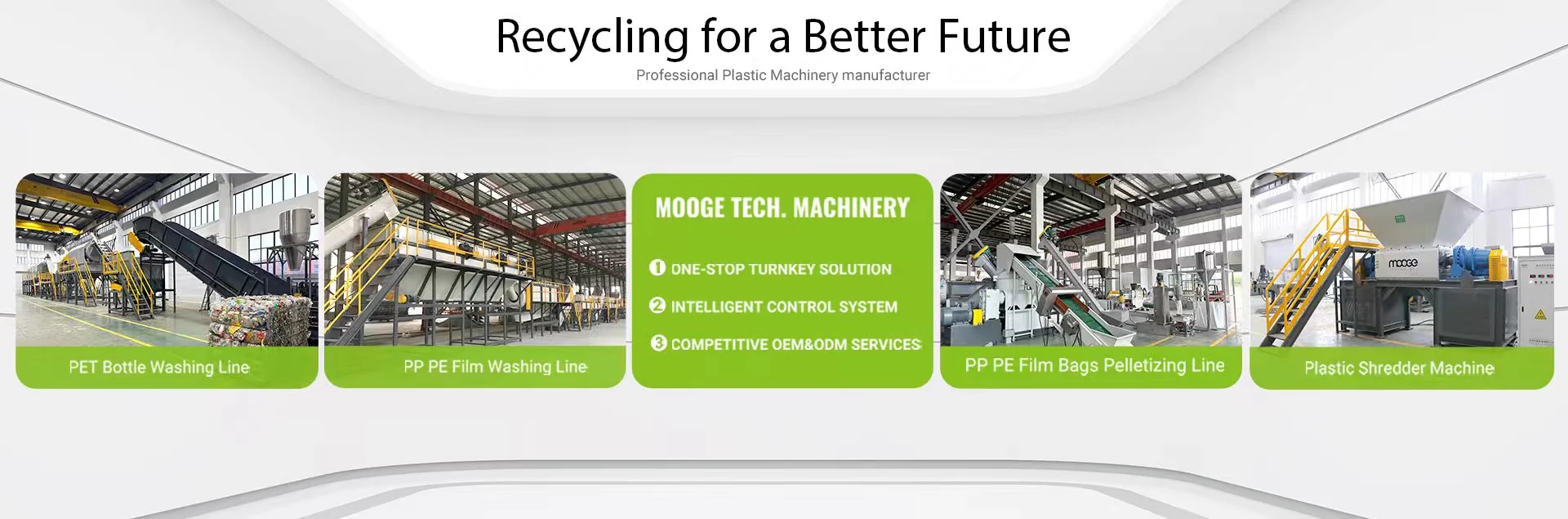
Bulky plastic waste causes problems in every recycling plant. Thick pipes, heavy sheets, drums and injection molding waste jam feeders, overload crushers and slow down washing. A
Double Shaft Shredder Machine fixes this problem at the start of the process. It tears oversized pieces into smaller, more even material, so every machine after it can run smoothly.
This guide is for importers, plant owners and procurement teams who plan a rigid plastic washing line. It explains how the shredder works, what it can process, which machines follow it, and what to check before you ask for a quotation. The content follows Mooge's
Waste PE/PP/PS/ABS Rigid Plastic Recycling Line, which starts with a
double shaft shredder and ends with clean, dry plastic flakes.
What Is a Double Shaft Shredder Machine for Plastic Recycling?

A
double shaft shredder machine has two counter-rotating shafts fitted with cutting discs. The shafts turn slowly and deliver high torque. They grab, tear and cut bulky plastic instead of grinding it at high speed. In plastic recycling, this is the primary size-reduction machine. It prepares oversized material for the crusher and the washing equipment behind it.
In Mooge rigid plastic lines, the shredder handles primary crushing of waste plastics and rubber materials. It combines strong torque with low noise and reliable operation.
Why Primary Shredding Matters
- Protects downstream machines. Smaller pieces reduce shock loads on the crusher.
- Improves feeding. Even pieces move more smoothly on conveyors.
- Cuts handling volume. Shredded material is easier to store, move and wash.
- Supports cleaner flakes. Smaller pieces release dirt and trapped contaminants more easily.
How the Double Shaft Shredder Works in a Plastic Washing Line
The shredder is the first machine in the line. The full process follows this order:
- Feeding. Operators load rigid plastic into the hopper by forklift, loader or conveyor.
- Shredding. The two shafts pull material in and tear it into smaller pieces.
- Metal checking. A metal detector removes metal before it reaches the crusher.
- Crushing. A crusher with water reduces the pieces to flakes of about 10–20 mm.
- Washing and separation. Friction washing, float tanks and optional hot washing remove dirt, oil and heavy contaminants.
- Dewatering and drying. Moisture drops to about 3–5% after dewatering and to 1–2% or less after drying.
- Purification and packing. Label separation, metal removal and sorting finish the flakes before storage.
Double Shaft Shredder Machine Features and Advantages
Buyers should compare real working features, not general claims. These are the points that matter most in a rigid plastic line:
- High torque at low speed. The machine tears thick and bulky plastic that would stall a high-speed crusher.
- Low noise. Slow shaft rotation keeps the working environment more comfortable.
- Stable continuous operation. The shredder feeds the line at a steady rate.
- Flexible layout. Mooge designs each line around your factory area and final product requirements.
- Easy integration. The shredder connects to the metal detector, conveyor and crusher in one complete line.
Double Shaft Shredder Technical Specifications and Capacity
Mooge matches the shredder to your material, piece size and target capacity. The final configuration is confirmed in the quotation. Ask your supplier to state these points in writing:
- Motor power and drive type
- Number and thickness of cutting discs
- Blade material and replacement method
- Hopper size and feeding method
- Expected output piece size and hourly capacity
The shredder must also suit the capacity of the whole line. The MEB-Series rigid plastic recycling line covers input capacities from 300 to 3000 kg/h:
| Model |
Capacity |
Installed Power |
Water Supply |
Area Required (L×W×H) |
| MEB-300 |
300 kg/h |
120 kW |
4–5 m³/h |
20 m × 4.5 m × 6 m |
| MEB-500 |
500 kg/h |
150 kW |
4–5 m³/h |
25 m × 4.5 m × 6 m |
| MEB-1000 |
1000 kg/h |
200 kW |
6–8 m³/h |
35 m × 5 m × 6 m |
| MEB-2000 |
2000 kg/h |
300 kW |
8–10 m³/h |
75 m × 5 m × 7 m |
| MEB-3000 |
3000 kg/h |
400 kW |
10–12 m³/h |
85 m × 5 m × 7 m |
Installed power covers the whole washing line, not the shredder alone. Hot washing is optional on every model.
Materials You Can Shred: Rigid Plastic, Pipes, Drums and Lumps
The rigid line processes post-consumer and industrial rigid plastics, including:
- HDPE, PE, LDPE and PP plastic containers
- ABS and PS plastic parts and sheets
- Plastic pipes and industrial plastic scraps
- Injection molding waste
Drums and heavy lumps are common requests. Send us the size, wall thickness and weight of your largest pieces, and our engineers will confirm the right shredder configuration. Soft film and woven bags need a different process, so tell us if your material mix includes them.
Protecting the Shredder: Semi-Auto Metal Detector and Rubber Conveyor Belt
Metal is the biggest threat to blades and crushers. A
semi-auto metal detector finds and removes metal impurities from the raw material. This protects the downstream equipment from damage and keeps operation stable.
A
rubber conveyor belt then moves the material between machine units. It resists wear, runs steadily and has an adjustable belt speed, so you can match the feed rate to production needs.
Buyer tip: Remove large bolts, steel inserts and other metal parts at the source whenever possible. Detectors work best as a second line of defense.
From Shredding to Fine Crushing: Crusher Machine With Water
Shredding is only the first size-reduction step. The
crusher machine with water performs secondary crushing. It cuts the shredded pieces into smaller, more uniform particles. Water in the crushing chamber helps rinse the material while it is cut. Final flakes are usually 10–20 mm, which suits the washing stages that follow.
Some projects need a separate crusher or grinder outside the washing line. Mooge also supplies a
Plastic Crusher/Grinder Machine range for those cases.
Cleaning After Shredding: Friction Washing Loader and Float Washing Tanks
Clean flakes sell for a higher price, so washing quality matters. Three machines do most of the cleaning work:
- Friction washing loader machine. High-speed friction moves the flakes forward and scrubs off surface dirt at the same time.
- 1# float washing tank. It separates material by density. Light plastic floats and heavy contaminants sink.
- 2# float washing tank. It repeats the separation to remove remaining impurities and raise final purity.
Buyer tip: PE and PP normally float in water, while PS and ABS are slightly denser and may sink. Tell us your exact material mix so we can plan the separation correctly.
Hot Washing Machine for Oil, Glue and Heavily Contaminated Plastic
Some rigid plastic carries oil, glue or stubborn stains that cold water cannot remove. The
hot washing machine uses heated water and cleaning agents for deeper cleaning. In this line, hot washing runs at 60–90°C, followed by a freshwater rinse to remove residual chemicals. This improves the quality and purity of the recycled flakes.
Hot washing is optional. Choose it if your feedstock is oily or heavily contaminated. Skip it for cleaner material to save energy and operating cost.
Dewatering and Drying: Horizontal Dewatering Machine and Hot Air Dryer

Wet flakes cause problems in storage, sorting and pelletizing. Two machines solve this in sequence:
- Horizontal dewatering machine. High-speed rotation throws off excess water and reduces moisture to about 3–5%.
- Hot air dryer. Controlled hot-air circulation removes the remaining moisture and brings it down to 1–2% or less.
Good dewatering also lowers the energy the dryer needs, which reduces your running cost.
Purifying the Flakes: Zig-Zag Label Separator, Eddy Current and Automatic Sorting Machine
Buyers often judge flake quality by purity. Three final machines remove the last contaminants:
- Zig-zag label separator machine. Airflow separation removes labels, fines and light impurities from the flakes.
- Eddy current machine. It separates non-ferrous metals from the processed material and protects product quality.
- Automatic material sorting machine. It identifies and separates materials automatically, which improves accuracy and reduces labor cost.
Packing Silo System, Electric Control Panel and Waste Water Treatment System
The line ends with three support systems that affect daily operation:
- Packing silo system. It stores finished flakes and packs them automatically, with stable material discharge.
- Electric control panel. PLC control, safety protection and operation management make the line easier to run.
- Waste water treatment system. It removes suspended solids and contaminants from washing water. Treated water can be reused, which reduces fresh water use and supports local environmental requirements.
Double Shaft Shredder vs Single Shaft Shredder: Which One to Choose?
Both machines do primary size reduction, but they suit different jobs. Use this table to compare them:
| Factor |
Double Shaft Shredder |
Single Shaft Shredder |
| Cutting action |
Two counter-rotating shafts tear and cut material |
One rotor with blades cuts against fixed blades |
| Best for |
Bulky, thick and mixed rigid plastic |
Material that needs more controlled output size |
| Output size |
Coarser, less uniform pieces |
More even pieces when a screen is used |
| Typical role |
First step before a crusher |
Primary shredding, often with screen and hydraulic pusher |
| Mooge option |
Included in the rigid recycling line |
VH-Series and VS-Series |
For example, the
VH-Series High Duty Industrial Plastic Shredder Machine is a single shaft model rated from 500 to 2,000 kg/h. It suits film, woven bags, pallets, drums and lumps. You can compare all options on our
Plastic Shredder Machine page.
If your main feedstock is bulky rigid plastic going into a washing line, a
double shaft shredder machine is usually the practical choice. If you need tighter output size control, a single shaft model may fit better. Send us your material sample details and we will recommend one.
Why Choose Mooge as Your Double Shaft Shredder Manufacturer?
Jiangsu Mooge Machine Co., Ltd. builds plastic recycling machines and complete lines in Zhangjiagang, China. According to our company profile:
- 20+ years of R&D experience
- An 11,000 m² standard workshop
- A production and service team of more than 100 people
- 35 authorized technical patents
- ISO, SGS, CE and FDA NOL certificates
We test every machine before delivery and design lines to fit your plant, material and output target. Our engineers support projects from design to installation. After-sales support includes online installation guidance, real-time video troubleshooting, spare parts supply and a 2-hour response target. We have also installed and tested shredding and crushing lines at customer factories, including a project in Kenya.
How to Check Any Shredder Supplier
- Ask for running videos of the machine with material similar to yours.
- Request the main component brands and the blade material in writing.
- Confirm the spare parts list and delivery time for wear parts.
- Check what remote and on-site support is included.
Double Shaft Shredder Machine FAQs
What is a double shaft shredder machine used for in plastic recycling?
It performs primary size reduction. It tears bulky rigid plastic, such as pipes, sheets and containers, into smaller pieces before crushing and washing.
What capacity can I get?
The Mooge rigid plastic recycling line covers 300 to 3000 kg/h of input capacity. We select the shredder to match your line capacity and material.
What size are the final plastic flakes?
The shredder produces coarse pieces. The crusher then reduces them to flakes of about 10–20 mm for washing.
Can the machine handle metal contamination?
The line includes a semi-auto metal detector and an eddy current machine. Large metal parts can still damage blades, so remove them at the source when possible.
Do I need a hot washing machine?
Only for oily, glued or heavily contaminated plastic. Hot washing is optional on all MEB models. Clean feedstock usually works with cold washing.
What information should I send for a quotation?
Send your material type, the largest piece size, contamination level, target capacity (kg/h), final flake requirement, power supply and available factory space.
Get a Quotation for Your Double Shaft Shredder Machine
A
double shaft shredder machine is the foundation of a stable rigid plastic recycling line. It protects the crusher, improves feeding and prepares your material for clean washing and drying. The right configuration depends on your material, piece size and capacity target.
Share your material details with our engineers for product information, a customized line layout, a quotation or technical support.
Contact Us by email at sales@moogetech.com or by WhatsApp at +86 13584489215.