For plastic recyclers, waste management companies, and manufacturing plants, the first machine in the recycling line often decides how efficient the rest of the process will be. Bulky films, drums, pallets, and industrial scrap need to be reduced to a manageable size before they can be washed, crushed, or pelletized. This is where the
VH-Series High Duty Industrial Plastic Shredder Machine comes in.
Built by MOOGE, a Chinese manufacturer with more than 20 years of experience in plastic recycling equipment, the VH-Series is designed for buyers who need dependable primary size reduction — not just for one type of material, but for a wide range of bulky, rigid, or baled plastic waste. This article walks through how the machine works, what it can process, its technical specifications, and what international buyers should check before placing an order.
What Is the VH-Series High Duty Plastic Shredder Machine?

The
VH-Series High Duty Industrial Plastic Shredder Machine is a swing-arm, single-shaft shredder used as the primary size reduction stage in plastic recycling lines. It sits at the front of the process — before washing, crushing, drying, or granulation — and its job is to turn bulky or irregular plastic waste into consistently sized flakes or chunks that downstream machines can handle.
Unlike small workshop shredders, the VH-Series is purpose-built for continuous, heavy-duty operation. A hydraulic swing arm pushes material into the cutting chamber in a repeating arc motion, forcing it against a rotating cutter drum. This keeps the machine feeding itself without constant manual pushing, which matters for facilities running multiple shifts.
Typical buyers for this type of machine include:
- Plastic recycling plants processing post-industrial or post-consumer waste
- Waste management facilities handling mixed rigid and film plastics
- Manufacturing factories that generate their own plastic scrap and want to recycle it in-house
- Trading companies and project contractors sourcing equipment for recycling line projects
Materials the VH-Series Shredder Can Process
One reason buyers choose a
VH-Series High Duty Industrial Plastic Shredder Machine over a lighter-duty unit is material flexibility. The machine is built to handle bulky, rigid, and baled plastic waste that would jam or wear out a standard shredder quickly.
Materials commonly processed include:
- PP/PE agricultural film bales and industrial stretch wrap
- Woven bags and jumbo bags (FIBC bags)
- Fishing nets and hemp ropes
- Waste plastic pallets
- HDPE/PP drums and IBC containers, including large blue drums
- PVC/PE pipes
- Injection purgings and extruded lumps
- Scrap fiber and textile waste
Because input materials vary so widely from one factory to another, MOOGE reviews the material type, thickness, and expected volume before recommending a specific model and blade configuration. Buyers who are unsure whether their scrap is a good match for this machine should send photos and a rough monthly volume estimate when they request a quote — it is the fastest way to get an accurate recommendation instead of a generic one.
How the VH-Series Swing-Arm Single Shaft Shredder Works
Understanding the shredding process helps buyers evaluate whether this machine fits their production line. The VH-Series follows a straightforward but well-engineered sequence:
- Material is loaded into the hopper and falls into the shredding chamber under its own weight.
- A hydraulic swing arm moves in a reciprocating arc, continuously pressing material against the rotating cutter drum.
- Fixed and moving blades create a shearing zone that cuts the material into smaller pieces.
- A screen mesh allows correctly sized pieces to pass through, while oversized pieces are recirculated for further shredding.
- A PLC system monitors motor load in real time. If the cutter drum is overloaded, the machine automatically reverses to clear the blockage, then resumes forward operation without manual intervention.
This overload-protection logic is one of the more practical features for buyers running unattended shifts, since it reduces the risk of motor burnout from tramp material or overfeeding.
Output capacity ranges from 500 to 2,000 kg/h depending on the model, with a volume reduction of roughly 60–80%, which lowers handling and transportation costs for recyclers moving material to the next stage — whether that is a washing line, a crusher, or a
plastic pelletizing line.
VH-Series Models, Capacity & Main Parameters
MOOGE offers five standard VH-Series models, sized by rotor blade count and motor power. This lets buyers match the machine to their actual daily volume instead of over- or under-buying capacity.
| Model |
Rotor Blades |
Fixed Blades |
Power (kW) |
Rotor Speed |
Rotor Diameter |
Capacity |
| VH-4880 |
38 |
2 |
45 |
83 RPM |
480 mm |
500 kg/h |
| VH-48100 |
46 |
2 |
55 |
83 RPM |
480 mm |
800 kg/h |
| VH-48120 |
58 |
2 |
75 |
83 RPM |
480 mm |
1,000 kg/h |
| VH-48150 |
111 |
3 |
75+75 |
83 RPM |
480 mm |
1,500 kg/h |
| VH-48200 |
135 |
4 |
75+75 |
83 RPM |
480 mm |
2,000 kg/h |
A few notes that matter for procurement teams:
- All models share the same rotor diameter and rotor speed, so scaling up is mainly a matter of blade count and motor power rather than a completely different mechanical design.
- Larger models (VH-48150 and VH-48200) use dual motors to reach higher throughput while keeping the same low-speed, high-torque rotor concept.
- Actual output depends on material type and density — the figures above are based on standard test materials, and MOOGE can provide capacity estimates for a buyer's specific scrap on request.
Feeding Way: How Material Enters the Shredding Chamber

The
Feeding Way on the VH-Series is a funnel-shaped hopper positioned above the shredding chamber. Material is loaded from a forklift, crane, or conveyor belt and drops into the chamber under gravity, accumulating above the cutter rollers before the shredding cycle begins.
This simple, open-top design is deliberate. It allows facilities to feed bulky, irregular items — such as baled film or whole drums — without needing a separate pre-sizing step, which keeps the front end of the recycling line simpler and cheaper to run.
Magnetic Conveyor Belt: Automatic Metal Impurity Removal
After shredding, flakes drop onto a high-speed
Magnetic Conveyor Belt. Metal impurities mixed into the waste stream — iron wire, staples, small fasteners — are captured by a strong magnet built into the belt and automatically scraped off as the belt moves.
For buyers processing baled film or drums, this step matters more than it might seem. Metal contamination is one of the most common causes of downstream equipment damage, especially in granulators and extruders. Removing it early, right after shredding, protects the rest of the recycling line and reduces unplanned maintenance further down the process.
Gear Box: Hard-Tooth-Surface Power Transmission
The
Gear Box on every VH-Series model uses hard-tooth-surface gearing from established brands — including Tongli and Guomao, or the German brand SEW for buyers who prefer a European-branded drivetrain. These gearboxes go through carburizing, quenching, and gear-grinding processes to achieve high tooth-surface hardness.
For procurement managers comparing suppliers, the gearbox brand and hardening process are worth checking directly, since gearbox failure is one of the more expensive and disruptive repairs on any industrial shredder.
Rotor: 40Cr Alloy Steel, Low-Speed High-Torque Design
The
Rotor is machined from a single forging of 40Cr alloy structural steel, chosen for its balance of strength and toughness. It runs at a low speed of 83 RPM but delivers high torque, which allows it to absorb repeated material impacts and alternating torsional loads without fatigue failure over time.
Low-speed, high-torque rotor design is a deliberate engineering choice for heavy-duty shredders. It trades raw speed for durability and lower noise — an important factor for facilities operating near residential areas or working multiple shifts with on-site staff.
Screen Mesh: Rapid Hydraulic Screen Changing System
The
Screen Mesh is made from thick, wear-resistant steel plate with 100 mm apertures, wrapped around the cutter rotor in a semi-circular arc. It controls final output size by holding back oversized pieces for further shredding while letting correctly sized flakes pass through.
A practical detail for buyers: the screen can be exchanged in about 10 minutes using the machine's hydraulic control system. Fast screen changes reduce downtime when a facility switches between material types or needs a different output size for a specific customer order.
Blades: D2/SKD-11 Reusable Four-Edge Cutting Blades
The
Blades are made from D2 or SKD-11 high-carbon, high-chromium cold-work die steel, precision-forged for durability. Each blade has a symmetrical, square, four-edge design, so a single blade can be rotated diagonally continue to use twice before replacement — reducing long-term consumable costs.
Between 38 and 135 rotor blades are arranged in a V-shaped helical pattern around the cutter rotor, depending on the model. Blades are mounted on a separate blade holder, which simplifies maintenance since technicians can service or rotate blades without dismantling the entire rotor assembly.
Independent Hydraulic Power Unit: Pusher, Swing Arm & Screen Control
The
Independent Hydraulic Power Unit is driven by a 5.5 kW oil pump motor and controls several functions in one system: the pusher cylinder, the swing arm cylinder, and the hydraulic screen changer.
Keeping these functions on one independent hydraulic circuit — rather than spreading them across separate systems — simplifies maintenance and troubleshooting. If a hydraulic issue occurs, technicians have one system to check rather than several disconnected components.
Electrical Control Panel: PLC Overload Protection System
The
Electrical Control Panel houses a Siemens PLC and Schneider contactors, which are widely recognized industrial control brands. The system continuously monitors main motor current. If the load exceeds a preset threshold, it automatically stops the motor and reverses rotation to retract the material, protecting both the electrical and mechanical components.
All of this happens automatically, without an operator needing to watch the load meter or manually intervene during an overload event — which is particularly useful for facilities running lean staffing on the shredding line.
Why Choose MOOGE as Your VH-Series Shredder Manufacturer

Buyers sourcing recycling equipment from China are usually weighing a few things at once: engineering quality, communication, after-sales support, and whether the supplier can be trusted for a long-term relationship rather than a one-time sale. A few relevant facts about MOOGE:
- Over 20 years of R&D experience in plastic recycling machinery
- An 11,000 m² standard production workshop
- A production and service team of more than 100 people
- 35 authorized technical patents
- ISO, SGS, CE, and FDA NOL certifications held by the company
For buyers evaluating a
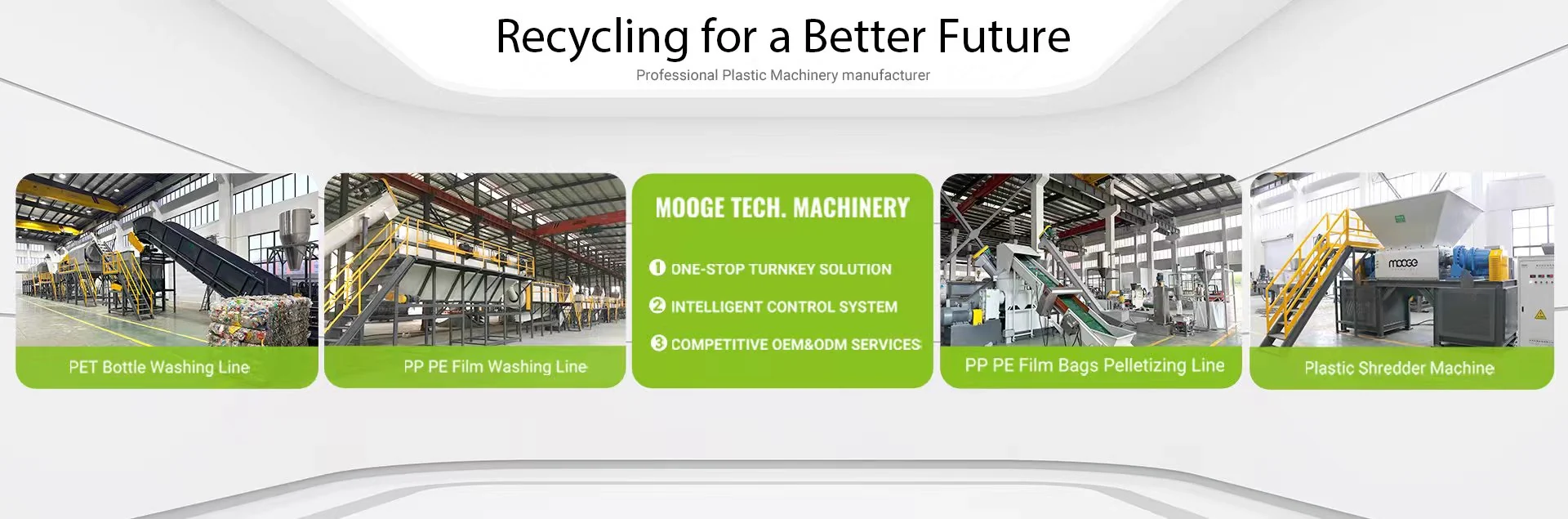
VH-Series High Duty Industrial Plastic Shredder Machine alongside other recycling equipment, MOOGE also manufactures complementary machines — including a
plastic crusher/grinder machine for secondary size reduction and a
PE/PP film/bags recycling line for washing shredded film. Buyers planning a full recycling line, rather than a single machine, can review the
plastic pelletizing line for the downstream granulation stage. More background on the company's facilities and certifications is available on the
About Us page.
Before placing an order, buyers should also verify a few standard supplier checks:
- Ask for the factory address and, where possible, arrange a video call or third-party inspection
- Request the actual material test or a sample run before finalizing blade and screen specifications
- Confirm lead time, packaging method, and export documentation in writing
- Clarify warranty terms and the availability of spare parts (blades, screens) for future orders
Before & After: Real Shredding Results (Video Demonstrations)
Photos and specifications only tell part of the story. MOOGE provides running video of the VH-Series shredding real material — including HDPE lumps being shredded and crushed at a customer's factory in Kenya, agricultural plastic film being processed at high capacity, and large pallets being shredded with the auto hydraulic feeder.
For buyers who cannot visit the factory in person, requesting a video of the machine running on material similar to their own scrap is one of the most reliable ways to confirm suitability before committing to an order.
Frequently Asked Questions About the VH-Series Plastic Shredder
1. What is the capacity range of the VH-Series shredder?Depending on the model, the VH-Series processes between 500 kg/h (VH-4880) and 2,000 kg/h (VH-48200). Actual throughput depends on the material type, thickness, and moisture content.
2. Can the VH-Series shred whole plastic drums and IBC containers?Yes. The machine is designed to handle HDPE/PP drums, big blue drums, and similar rigid containers, along with pipes, pallets, and baled film.
3. How often do the blades need to be replaced?The rotor blades are made from D2/SKD-11 steel with a four-edge design, so each blade can be rotated and reused up to four times. Actual blade life depends on material hardness and contamination (such as metal or sand).
4. How long does it take to change the screen mesh?The hydraulic screen-changing system allows the screen to be swapped in approximately 10 minutes, which helps minimize downtime when switching between output sizes or material types.
5. Does MOOGE offer customization for specific materials or capacities?Yes. MOOGE reviews the buyer's material samples, expected volume, and site conditions before recommending a model, blade configuration, and screen size suited to that specific application.
6. What certifications does MOOGE hold?MOOGE holds ISO, SGS, CE, and FDA NOL certifications at the company level. Buyers requiring specific certification documents for import or customs purposes should request them directly during the quotation process.
Conclusion
Choosing the right primary shredder affects everything downstream in a plastic recycling line — throughput, maintenance costs, and how consistently the output feeds the next machine. The
VH-Series High Duty Industrial Plastic Shredder Machine is built around a straightforward goal: reduce bulky, rigid, and baled plastic waste into consistent flakes, reliably, with minimal manual intervention.
If you are evaluating shredders for a new recycling line or replacing aging equipment, share your material type, expected volume, and site requirements with MOOGE's team. They can recommend the right VH-Series model, confirm lead time, and walk you through customization options, sample testing, and export support. Contact MOOGE through the
Contact page to request a quotation or technical consultation for your project.