Choosing the right
plastic washing machine is one of the most important decisions a recycler or plastics processor makes. The wrong equipment leads to poor flake quality, high water and energy use, and frequent downtime. The right one turns waste PET bottles, PE/PP film, and rigid containers into clean, sellable flakes that meet your customers' specifications.
MOOGE (Jiangsu Mooge Machine Co., Ltd.) designs and manufactures
plastic washing machine systems and complete
plastic recycling line solutions for PET, PE, PP, HDPE, PS, and ABS materials. We supply importers, distributors, OEM/ODM buyers, project contractors, and factory procurement teams across North America, Europe, the Middle East, Asia-Pacific, South America, and Africa.
This guide covers how a
plastic washing machine works, what specifications and capacities are available, what affects price, and what to check before you send an inquiry — so you can compare suppliers with confidence and ask the right technical questions.
What Is a Plastic Washing Machine? (Definition & Function)

A
plastic washing machine is industrial equipment used to clean contaminated plastic waste — such as PET bottles, PE/PP film, woven bags, and rigid containers — before it is pelletized or reprocessed into new products. It removes dirt, labels, glue, oil, food residue, and other impurities that would otherwise reduce the quality of recycled material.
In practice, a single
plastic washing machine is rarely used alone. It is normally part of a larger
plastic washing line or
waste plastic recycling line, which combines crushing, floating separation, friction washing, dewatering, and drying into one continuous process. The output is clean plastic flake, ready for a
plastic pelletizing machine or direct sale as recycled flake.
How a Plastic Washing Machine Works – Step-by-Step Process
Although designs vary by material type, most
plastic washing machine systems follow a similar process flow:
- Feeding & sorting – Bales are opened and materials are manually or automatically sorted by type and color.
- Crushing – A crusher machine or plastic shredder reduces bottles, film, or rigid parts into smaller flakes or pieces.
- Floating separation – A floating washing tank separates lighter plastics (PE, PP) from heavier contaminants (PET, metal, stones) using density differences.
- Friction washing – High-speed friction washers scrub the flakes to remove labels, glue, dirt, and surface contamination.
- Rinsing & dewatering – Centrifugal dewatering machines remove surface water, dropping moisture content significantly before drying.
- Drying – A hot air dryer reduces final moisture to under 1–2%, producing flake that is stable for storage or pelletizing.
PET Bottle Washing Machine – Specifications & Capacity
For PET bottle recycling, the
plastic washing machine setup typically includes a bale opener, trommel, sorting platform, label remover, crusher, floating washing tanks, friction dewatering washers, hot washer, and a zigzag air classifier for label and fines removal. This produces clean PET flakes suitable for fiber, sheet, strap, or bottle-to-bottle applications.
MOOGE's
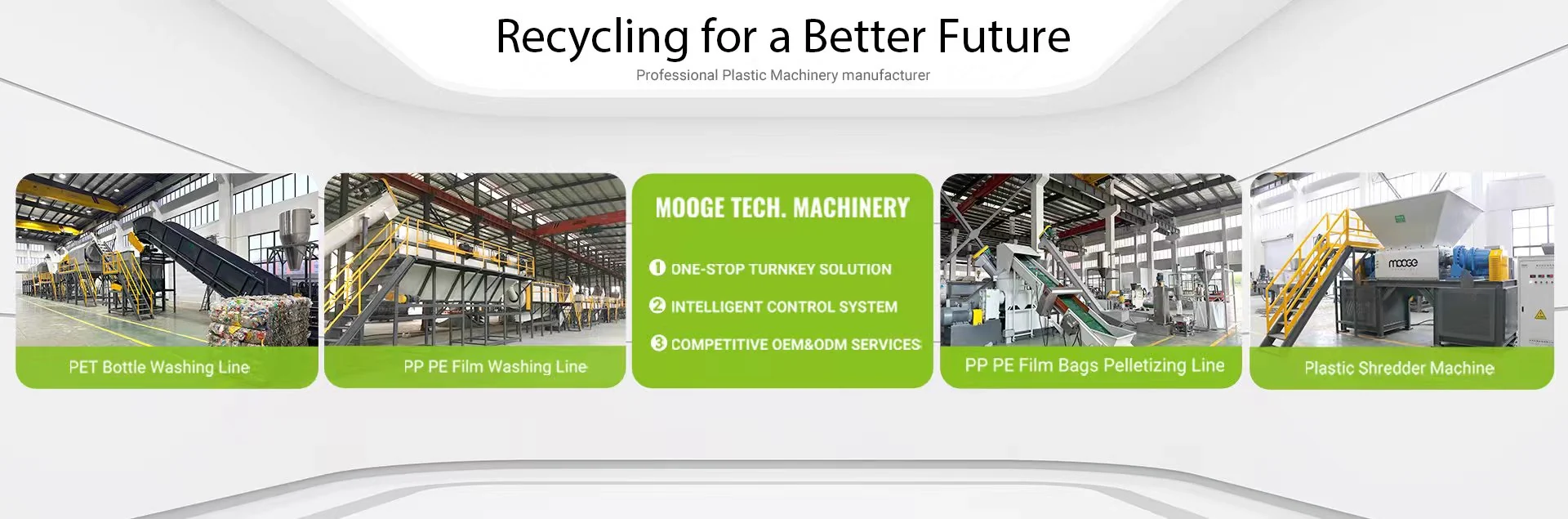
PET Bottle Washing Line is built for continuous, automated operation and can be configured to your target capacity, flake size, and moisture requirement. If your project involves PET bottle or PET sheet waste, this is the product line to review first.
PE/PP Film & Bag Washing Machine – Specifications & Capacity
Film and woven bag recycling — agricultural film, shopping bags, packaging film, and woven sacks — requires a different washing configuration than rigid PET bottles. Because film is lightweight and often heavily printed or soiled, the line places more emphasis on pre-washing, high-speed friction washing, and thorough drying.
MOOGE's
PE/PP Film/Bags Recycling Line handles agriculture film, greenhouse film, shopping bags, woven bags, and mixed PE/PP packaging waste. Capacity, wash-tank count, and drying system size are adjusted based on your raw material condition and target output.
Rigid Plastic (PE/PP/PS/ABS) Washing Machine Options
Rigid plastic waste — HDPE/PP bottles, buckets, crates, drums, and household appliance housings (PS/ABS) — needs heavier-duty crushing and a robust floating tank system to separate different resin types before washing.
MOOGE's
PE/PP/PS/ABS Rigid Recycling Line is designed for this category, with wet crushers, floating separation tanks, and friction washers sized to handle bulkier, heavier feedstock without excessive downtime.
Plastic Washing Machine Capacity Range (300kg/h–3000kg/h)
Capacity is one of the first questions buyers ask, and it depends on material type, contamination level, and target flake purity. The table below gives a general reference range for each material category.
 Exact capacity depends on your feedstock condition (contamination level, moisture, bale density) and the target flake purity. Share your material sample or photos with our team for an accurate recommendation.
Key Components of a Plastic Washing Line (Crusher, Washer, Dryer)
A complete
plastic washing line is built from several core machines working together:
- Crusher / Shredder – Reduces bottles, film, or rigid plastic into flakes; see our Plastic Shredder Machine for heavy-duty pre-shredding of bulky waste.
- Floating washing tank – Separates plastic by density and removes heavier contaminants.
- Friction washer – Uses high-speed rotation and water pressure to scrub off surface dirt, labels, and glue.
- Dewatering machine – Centrifugal spinning removes most surface water before drying.
- Hot air dryer – Reduces final moisture content so flakes can be safely stored or pelletized.
- Pelletizing line (optional) – Converts dried flake into pellets; see our Plastic Pelletizing Line if you want finished pellets rather than flake.
Friction Washer vs. Floating Washing Tank – Which Do You Need?
These two components serve different purposes, and most
plastic washing machine lines use both together rather than choosing one over the other.
A
floating washing tank relies on density difference: PE and PP float, while PET, PVC, and heavier contaminants sink. This is the first-stage separation step, especially important when your feedstock is a mix of resin types.
A
friction washer works mechanically — flakes are scrubbed against each other and the machine's internal surfaces under water pressure. This stage is essential for removing labels, glue, and stubborn surface dirt that density separation alone cannot remove.
If your feedstock is a single, mostly clean resin type, a friction washer alone may be sufficient. If your material is mixed or heavily contaminated, you will need both stages in sequence.
Plastic Washing Machine Price Factors: What Affects Cost
Buyers often ask for a single price before sharing project details, but a
plastic washing machine quotation depends on several variables:
- Capacity (kg/h) – Higher throughput requires larger tanks, motors, and drying capacity.
- Material type – PET bottle lines, film lines, and rigid lines use different component configurations.
- Automation level – Manual sorting stations versus fully automated feeding and control systems.
- Number of washing stages – More floating tanks and friction washers improve flake purity but add cost.
- Drying system size – Higher final purity requirements need larger or multi-stage dryers.
- Auxiliary equipment – Metal detectors, label removers, and air classifiers are often added based on feedstock condition.
Because of these variables, the most useful first step is sharing your target material, capacity, and current contamination level so our engineering team can quote an accurate configuration instead of a generic estimate.
Benefits of a Turnkey Plastic Washing Line
Buying a complete, engineered
plastic washing line instead of individual machines from different suppliers has practical advantages for overseas buyers managing a project remotely:
- Single point of responsibility – One supplier is accountable for how components work together, not multiple vendors pointing fingers.
- Matched capacity – Crushing, washing, and drying stages are sized to work together without bottlenecks.
- Simplified installation – Layout, piping, and electrical requirements are planned as one system.
- Coordinated after-sales support – One technical contact for spare parts, troubleshooting, and upgrades.
Applications: Agriculture Film, Woven Bags, PET Bottles & More
MOOGE's
plastic washing machine and
waste plastic recycling line systems are used across a wide range of feedstock types:
- PET beverage and mineral water bottles
- PE/PP agriculture and greenhouse film
- Shopping bags and packaging film
- PP/PE woven bags and cement bags
- HDPE/PP rigid bottles, buckets, and crates
- PS/ABS housings from household appliances
Energy-Efficient & Low Water Consumption Design

Water and electricity are ongoing operating costs, not one-time expenses, so line design matters over the life of the equipment. MOOGE's
plastic washing line systems are engineered with water recycling in the washing and rinsing stages and motor configurations selected to match actual load rather than oversized defaults, which helps control per-ton processing cost as your plant scales up.
ISO / CE / FDA Certified Manufacturing Standards
MOOGE operates an 11,000 m² standard workshop with a 100+ person production and service team, backed by over 20 years of R&D experience and 35 authorized technical patents. Our facility and products hold ISO, SGS, CE, and FDA NOL certification, which matters for buyers who need to meet import compliance or downstream customer requirements. You can review our facility and background on the
About Us page.
Plastic Washing Machine vs. Traditional Manual Cleaning
Some smaller operations still rely on manual cleaning — soaking, hand-scrubbing, and air-drying — before crushing plastic waste. This works at very low volumes but does not scale, and quality is inconsistent because it depends on labor speed and attention.
A
plastic washing machine line replaces this with a repeatable mechanical process: consistent wash time, consistent water pressure, and consistent drying, batch after batch. For any operation processing more than a few hundred kilograms per day, mechanized washing is what makes stable flake quality and predictable output possible.
FAQs: Choosing the Right Plastic Washing Machine for Your Business
What capacity plastic washing machine do I need for my business?It depends on your material type and daily volume target. MOOGE's lines range from around 300 kg/h for smaller film or rigid operations up to 3,000 kg/h for PET bottle lines. Share your target output and material type with our team for a specific recommendation.
Can one plastic washing machine handle both PET and PE/PP materials?Not efficiently in a single fixed configuration. PET bottle lines and PE/PP film or rigid lines use different crushing, floating, and washing setups because the materials behave differently in water and require different flake sizes. Most buyers choose a dedicated line per material type, or a custom line if their feedstock mix is stable.
How much water does a plastic washing line use?Water use depends on capacity, contamination level, and whether water recycling is included in the design. MOOGE's washing lines are configured with recirculation in the washing and rinsing stages to reduce fresh water consumption; exact figures depend on your specific line configuration.
Do you provide installation and training support for overseas buyers?Yes. We provide a pre-sale technical offer, machine layout, and installation guidance, and can arrange engineer support and worker training for the installation phase. Spare parts and technical support continue after the equipment is running.
Can the plastic washing machine be customized for my raw material condition?Yes. Configuration — number of washing tanks, drying capacity, auxiliary equipment like label removers or metal detectors — is adjusted based on your feedstock's contamination level and your target flake purity. Sending photos or a sample of your material helps us recommend the right setup.
What certifications does MOOGE hold?MOOGE's facility and equipment are ISO, SGS, CE, and FDA NOL certified. Details are available on our About Us page, and certificate documentation can be provided on request during the inquiry process.
Conclusion
Selecting a
plastic washing machine is a technical decision as much as a commercial one. Capacity, material type, number of washing stages, and drying capability all affect the quality and consistency of your final flake — which is what your downstream customers are actually paying for.
MOOGE manufactures
plastic washing machine systems and complete
plastic recycling line solutions for PET, PE, PP, HDPE, PS, and ABS materials, with ISO/CE/FDA certified production and support for buyers across North America, Europe, the Middle East, Asia-Pacific, South America, and Africa.
If you're evaluating equipment for a new or expanding recycling operation,
contact our team with your material type, target capacity, and any samples or photos you can share. We'll recommend a configuration and provide a detailed quotation based on your actual project — not a generic price list.