Introduction
For recycling plants, plastics processors, and waste management companies, choosing the right
plastic shredder machine affects everything downstream — output particle size, energy cost, and how much manual sorting your team still has to do before the material reaches a pelletizing line. If you are an importer, distributor, OEM buyer, or procurement manager sourcing recycling equipment from China, you already know the market is crowded with suppliers offering similar-looking machines at very different price points and build quality.
This guide explains what a
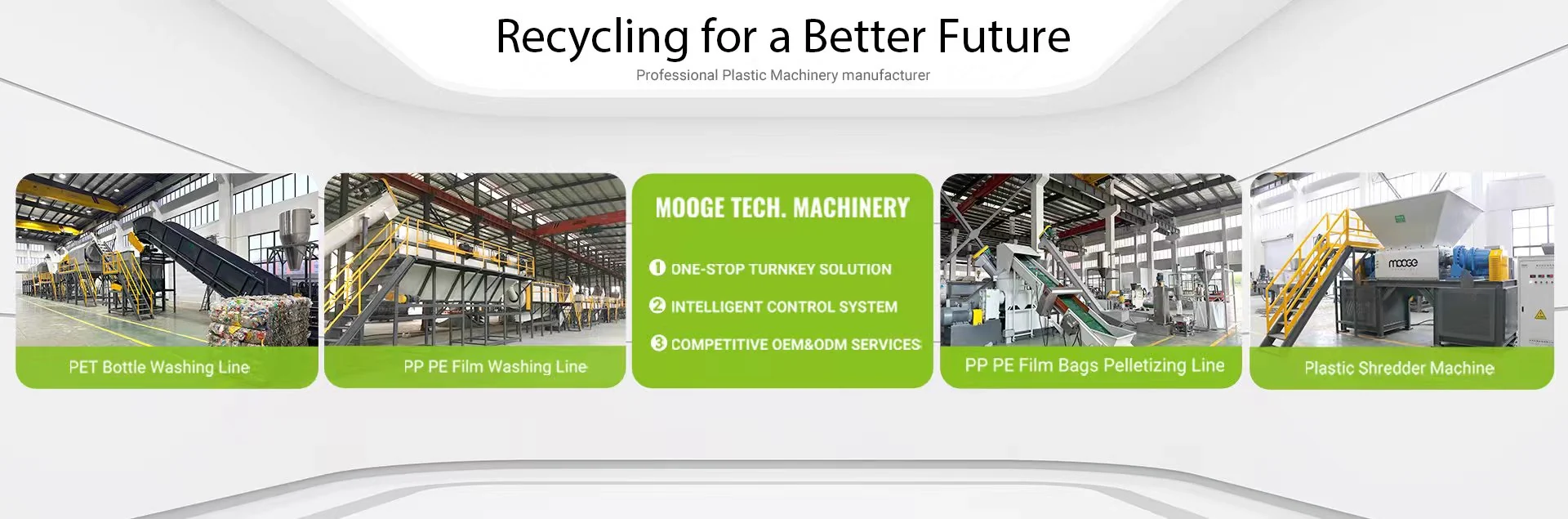
plastic shredder machine does, how single-shaft and dual-shaft designs differ, which materials each configuration handles best, and what to check before sending an inquiry to a Chinese manufacturer. It also covers how MOOGE builds and supports its
industrial plastic shredder machine line for buyers across North America, Europe, the Middle East, Asia-Pacific, South America, and Africa — factory direct, with no trading company markup.
What Is a Plastic Shredder Machine?

A
plastic shredder machine is mechanical equipment that cuts bulky or irregular plastic waste into smaller, uniform pieces so it can be washed, sorted, or fed into a pelletizing line. Unlike a plastic crusher, which mainly grinds thin or brittle items, a shredder is built to tear through thick-walled, tough, or bulky material — drums, pallets, pipe offcuts, engineering blocks — using slow-speed, high-torque cutting rather than high-speed grinding.
For recycling plants and plastics processors, a
shredder machine for plastic is usually the first step in the line. It reduces material to a size that downstream washing, separation, or granulating equipment can actually handle.
How a Plastic Shredder Machine Works
Most single shaft shredder machines share the same basic process:
- Material is fed into a hopper, either manually or by conveyor.
- Rotating shafts fitted with hardened steel blades pull the plastic in and cut it against fixed counter-knives.
- A screen at the bottom controls output size — material stays in the chamber until it passes through the mesh.
- Shredded plastic exits via a discharge chute or conveyor, ready for the next processing stage.
Motor power, shaft speed, and blade geometry are matched to the material. A machine set up for soft film waste is not the right choice for rigid drums or pipe, which is why shaft configuration matters more than most buyers expect.
Single-Shaft vs Dual-Shaft Plastic Shredder Machines
Shaft configuration is the single biggest factor in matching a shredder to your material. Here's how the two main types compare:
| Feature |
Single-Shaft Shredder |
Dual-Shaft Shredder |
| Best for |
Films, bags, pipes, lumps, mixed rigid plastics |
Bulky, tough items — hollow drums, pallets, large blocks |
| Cutting action |
Rotor blades against a fixed bed knife, with screen control |
Two counter-rotating shafts tear material apart |
| Output uniformity |
High — controlled by screen size |
Moderate — often needs a second shredding or crushing stage |
| Typical use case |
General recycling plants, mixed waste streams |
Heavy-duty pre-shredding before final size reduction |
If your feedstock is consistent (for example, only PET bottles or only film), a single-shaft
plastic shredder machine usually gives better output control. If you are dealing with mixed, bulky, or unpredictable waste, a dual-shaft configuration handles the initial breakdown more reliably.
Plastic Shredder Machine Technical Specifications
Exact figures vary by model and by the material you're processing, but most industrial plastic shredder machines fall within these general ranges:
| Parameter |
Typical Range |
| Motor Power |
15 kW – 75 kW+ |
| Shaft Configuration |
Single-shaft or dual-shaft |
| Blade Material |
Hardened alloy steel (D2 or equivalent) |
| Screen / Mesh Size for single shaft shredder |
40 mm – 120 mm (adjustable) |
| Feed Opening |
Customized to material size |
| Capacity |
200 kg/h – 2,000+ kg/h, model dependent |
Because throughput depends heavily on the plastic type, moisture content, and target output size, MOOGE confirms exact specifications against your material samples before quoting — this avoids buyers paying for a machine that's undersized, or oversized, for their actual feedstock.
Materials Our Plastic Shredder Machine Can Process (PET, PE, PP, HDPE, PVC)

A well-built plastic shredder machine should handle a wide range of resin types without frequent blade replacement. MOOGE's shredder line is built to process:
- PET — bottles, sheet, preform scrap
- PE / HDPE — soft plastic film, jumbo bags, hollow containers, drums, crates, pipe
- PP — rigid plastic parts, lumps, battery cases
- PVC — pipe offcuts, profile scrap
- Mixed rigid plastics from post-consumer or post-industrial sources
Blade hardness and shaft torque are adjusted depending on whether you're running soft film-type material or dense, thick-walled parts. If your waste stream mixes several resin types, tell your supplier this upfront — it affects blade selection and screen size, not just motor power.
Plastic Shredder Machine for Bottles, Films, and Rigid Plastics
Light, thin-walled material like bottles, film, and bags behaves very differently under the blades than rigid plastic. For film and bags, a purpose-built shredder avoids the tangling and blade-wrapping issues generic machines run into. If your operation already runs bottle washing separately, pairing your shredder with a
PET Bottle Washing Line lets you shred first and wash immediately after, cutting down on intermediate handling. For businesses processing packaging film specifically, it's often more efficient to route that material through a
PE/PP Film/Bags Recycling Line built for flexible plastics, and use the shredder for the rigid fraction only.
Industrial Plastic Shredder Machine for Recycling Plants
For recycling plants processing continuous volumes, uptime and blade life matter more than raw shredding speed. An
industrial plastic shredder machine for a plant environment should offer:
- Reversible rotor function to clear jams without shutting down the line
- Wear-resistant, replaceable blade sets rather than fixed cutting heads
- PLC control for adjustable speed and overload protection
- A screen system sized to your downstream equipment's feed requirements
Plants running continuous shifts should also confirm blade replacement lead time and whether spare parts are stocked or made to order — this affects real-world downtime more than the headline capacity figure.
Plastic Shredder Machine for Pipes, Pallets, and Bulky Waste
Pipe offcuts, pallets, and large moulded parts need higher torque and a wider feed opening than a standard shredder line. These items don't feed evenly, so the hopper design and shaft spacing have to account for irregular shapes rather than uniform scrap. For this category, single shaft configuration generally outperforms dual-shaft models, since it tears material apart instead of relying on a consistent bite angle. If bulky waste is a major part of your stream, mention the largest expected piece size when requesting a quote — it changes the recommended feed opening and motor sizing.
Why Choose MOOGE Plastic Shredder Machine – Factory Direct Advantages
Buying factory direct from MOOGE means:
- No trading company mark-up between you and the manufacturer
- Direct technical communication with the engineers who build the machine
- Customization based on your actual feedstock and space constraints
- A consistent point of contact for quotation, production updates, and after-sales support
Jiangsu Mooge Machine Co., Ltd has over 20 years of R&D experience in plastic recycling machinery, an 11,000 m² standard workshop, and a 100+ person production and service team. You can review the company background on the
About Us page before requesting a quotation.
Plastic Shredder Machine Manufacturing & Quality Control Process

A shredder's reliability comes down to a few manufacturing details buyers should ask about directly:
- Blade material and heat treatment — determines wear resistance and how often blades need replacement
- Shaft and bearing tolerances — poor tolerances cause vibration and premature wear
- Frame and housing thickness — thin housings flex under load and shorten machine life
- Motor and gearbox brand — affects both performance and the availability of replacement parts
Ask your supplier for photos or video of the specific machine before shipment, not just stock catalog images. This is a normal request for B2B buyers, and any established manufacturer should be able to provide it.
Plastic Shredder Machine Price – Factory Direct vs Trading Company
Plastic shredder machine price varies widely based on motor power, shaft configuration, blade material, and control system — not just capacity. Buying factory direct instead of through a trading company generally means:
| Factor |
Factory Direct |
Trading Company |
| Pricing |
Manufacturer's cost + margin |
Manufacturer's price + trading company margin |
| Technical questions |
Answered by the engineering team |
Passed through a middleman, slower |
| Customization |
Discussed directly with the factory |
Limited, or requires renegotiation |
| Accountability |
Direct warranty and support relationship |
Split between two parties |
When comparing quotes, ask exactly what's included — motor brand, warranty period, spare blade sets, and shipping terms (FOB, CIF, etc.) all affect the real cost, and two quotes with the same headline price can differ significantly once these are factored in.
Global Installation & After-Sales Support for Plastic Shredder Machines
Buyers outside China understandably want to know how installation and support work once the machine leaves the factory. Reasonable questions to ask any supplier include:
- Is remote installation guidance provided, or is an on-site engineer available?
- What's the standard warranty period, and what does it cover?
- How are spare parts shipped, and what's the typical lead time?
- Is there multilingual technical support for troubleshooting?
Confirm these details in writing before placing an order — export support quality varies a lot between suppliers, even when the machines themselves look similar on paper.
Plastic Shredder Machine Maintenance and Spare Parts

Routine maintenance keeps a shredder running at rated capacity and extends blade life:
- Inspect and rotate blades on a set schedule based on material hardness
- Check screen mesh for wear and replace before holes enlarge beyond spec
- Lubricate bearings and gearboxes according to the manufacturer's interval
- Keep a spare blade set and key wear parts on hand to avoid production downtime
Ask your supplier which parts are considered standard wear items and how quickly they can be resupplied — this is often more important long-term than the machine's initial price.
Frequently Asked Questions About Plastic Shredder Machines
How much does a plastic shredder machine cost?
Price depends on motor power, shaft configuration, blade material, and customization. Factory direct pricing from a Chinese manufacturer is typically lower than buying through a trading company, since there's no added margin layer.
What size plastic shredder machine do I need?
This depends on your daily volume, the type of plastic waste, and the required output particle size. Suppliers usually recommend a model after reviewing your material type and target throughput.
What's the difference between a plastic shredder and a plastic crusher?
A shredder handles thicker, bulkier, or tougher material using slow-speed, high-torque cutting. A crusher/grinder is generally used for thinner, more brittle material and produces a finer output.
Can one plastic shredder machine handle mixed plastic types?
Yes, within limits. Mixed PET, PE, PP, and HDPE can usually run through the same machine, but blade selection and screen size should be adjusted based on the mix.
Do you provide customized plastic shredder machines?
Yes. Motor power, shaft configuration, feed opening, and screen size can be customized based on your material and space requirements.
What after-sales support is included?
Standard support includes installation guidance, a warranty period, and spare parts supply. Buyers should confirm the specific terms with the manufacturer before ordering.
Plastic Shredder Machine vs Plastic Crusher – What's the Difference?
These two machines are often confused, but they serve different stages of recycling:
- A shredder machine cuts bulky, thick, or tough plastic into coarse pieces — the first step for pipes, drums, pallets, and mixed rigid waste.
- A crusher/grinder reduces smaller or pre-shredded plastic into finer granules, closer to what a pelletizing line needs.
Many recycling lines use both in sequence — for example, shredding a container first, then feeding pieces into a
Plastic Crusher/Grinder Machine for final size reduction. If you're not sure which stage your process needs, describe your incoming material and target output size, and a supplier can recommend the right combination rather than a single machine.
Conclusion
Choosing the right
plastic shredder machine comes down to matching shaft configuration, blade material, and screen size to your actual waste stream — not just comparing capacity numbers on a spec sheet. Whether you're processing PET bottles, PE film, rigid HDPE containers, or bulky pipe and pallet waste, the details covered here should give you a clearer basis for comparing suppliers and asking the right technical questions.
MOOGE manufactures plastic shredder machines factory direct from Jiangsu, China, with customization available based on your material and throughput requirements. If you'd like a quotation, technical drawing, or sample video of a specific model, contact MOOGE directly with your material type and target capacity, and the engineering team will recommend a suitable configuration.